NEWS
"STRONG ESKİŞEHİR AGAINST CLIMATE CHANGE" PROJECT COMPLETED
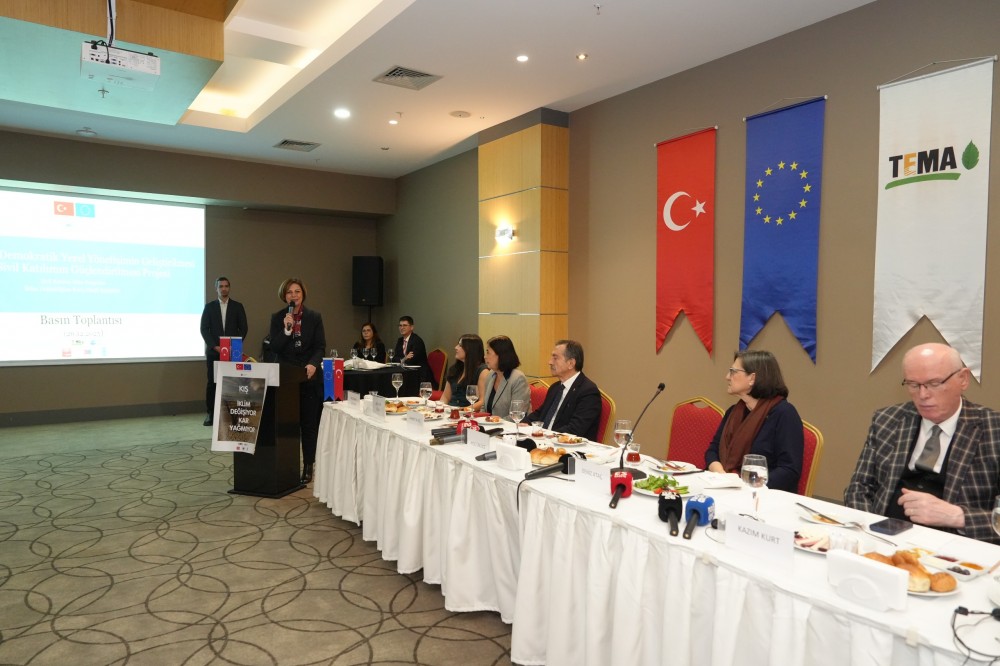
The "Strong Eskişehir Against Climate Change" Project, implemented through the cooperation of Eskişehir Metropolitan Municipality and TEMA Foundation, was concluded with a closing meeting held in Eskişehir. The project aimed to enhance Eskişehir's capacity to adapt to climate change and to prepare the city for a resilient future, while also standing out as a successful example of cooperation between local governments and civil society.
Implemented within the scope of the Civil Participation Project--financed by the European Union, led by the Union of Municipalities of Türkiye and the Directorate for European Union Affairs of the Ministry of Foreign Affairs, and implemented by the United Nations Development Programme (UNDP)--the project was completed with a meeting held in Eskişehir.
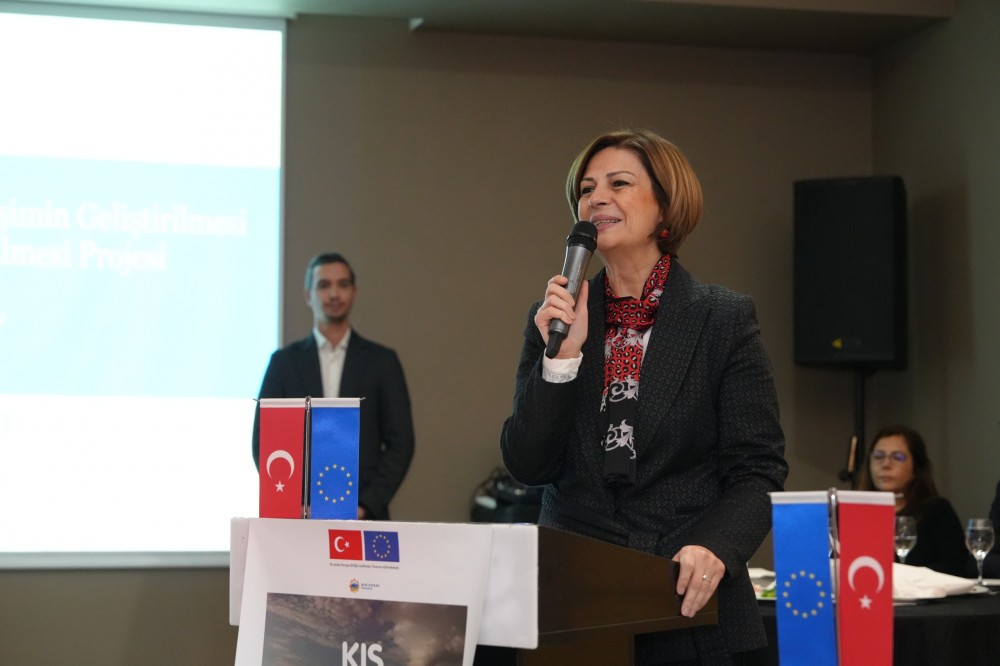
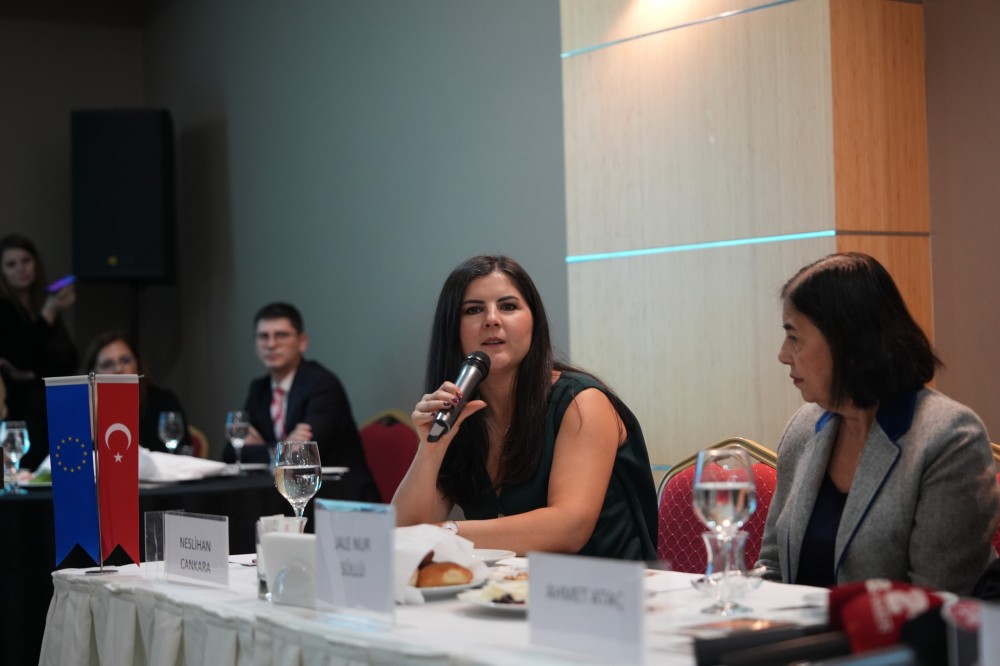
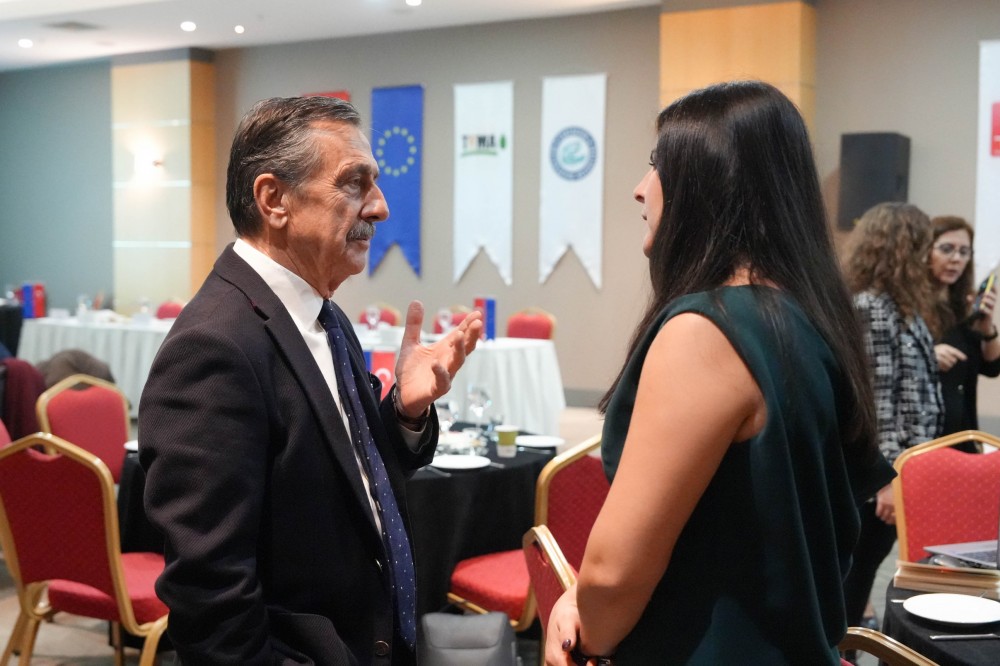
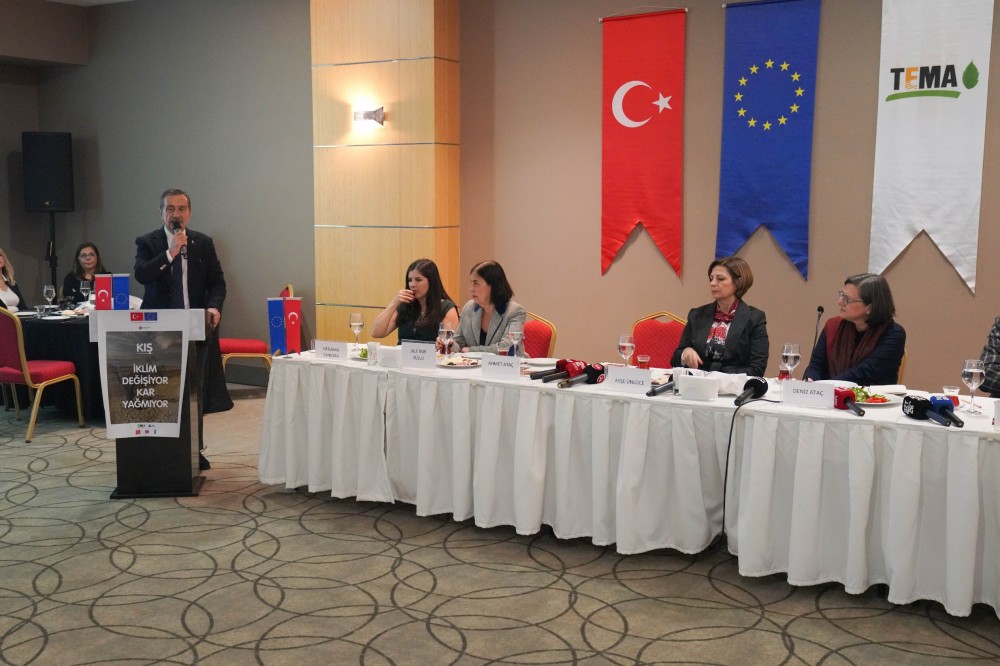
The closing meeting was attended by Ayşe Ünlüce, Mayor of Eskişehir Metropolitan Municipality; Dr. Jale Nur Süllü, CHP Member of Parliament for Eskişehir; Kazım Kurt, Mayor of Odunpazarı; Ahmet Ataç, Mayor of Tepebaşı; Uğur Tepe, Mayor of Seyitgazi; Deniz Ataç, Chair of the Board of the TEMA Foundation; and Neslihan Yumukoğlu Cankara, UNDP Civil Participation Project Manager and Chief Technical Advisor. Representatives from metropolitan and district municipalities, staff members of TEMA Foundation, civil society organization representatives, and members of the press were also present at the meeting.
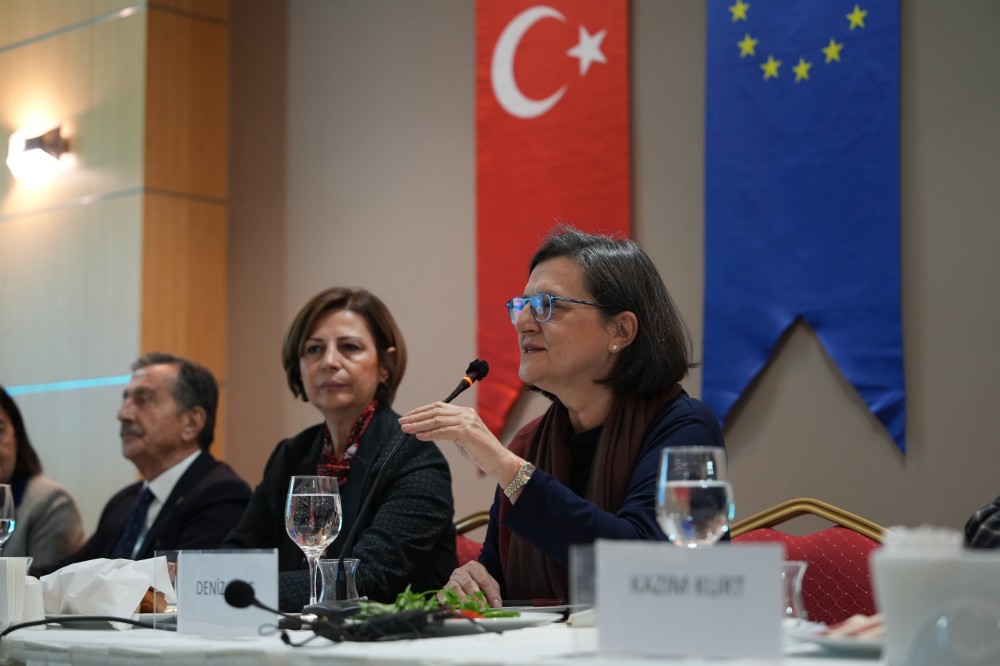
Chair of the Board of the TEMA Foundation, Deniz Ataç, emphasized that the climate crisis is not only an environmental issue but also a matter of life itself, underscoring the critical importance of local governments, civil society, and the public acting together in the fight against the crisis. In her speech, Deniz Ataç stated the following:
"Climate change is no longer a distant risk; it is a reality that directly affects our cities' present and future, impacting every aspect of life--from water resources to public health. Through the 'Strong Eskişehir Against Climate Change' project, we have established a solid platform that enables local governments--led by Eskişehir Metropolitan Municipality--civil society, and the people of Eskişehir to jointly understand climate risks and collectively discuss solutions through shared reasoning. Within the scope of the project, climate risk maps were developed, and 26 individuals received specialized technical training. The outcomes of this process are not merely confined to reports; they represent a significant step that resonates within the city's collective memory and strengthens local capacity for collaborative solution-building. This is not the end, but a strong beginning for Eskişehir to move forward with more participatory, inclusive, and resilient steps in its climate change adaptation process. I sincerely thank all municipalities, stakeholders, experts, and the people of Eskişehir who contributed to this process."
Emphasizing the importance of the project implemented within the scope of the Civil Participation Project, Neslihan Yumukoğlu Cankara, UNDP Civil Participation Project Manager and Chief Technical Advisor, stated: "I would like to thank the leadership of the TEMA Foundation and Eskişehir Metropolitan Municipality for successfully completing this valuable project and to express how proud I am to work with them. We no longer view climate change solely as an environmental issue; we address it as a matter of climate justice and human rights. For this reason, we act with the principles of participation, inclusivity, and leaving no one behind. Eskişehir's strong culture of active citizenship is a significant advantage. If we can involve citizens and civil society in decision-making processes from the planning stage onward, we can make our cities more resilient to disasters. We will continue our efforts to integrate and support this approach within local governments."
Speaking at the closing meeting of the project aimed at enhancing Eskişehir's climate change adaptation capacity and resilience, Uğur Tepe, Mayor of Seyitgazi, stated: "Water resources have become a strategic issue for Seyitgazi. Although we have 670,000 decares of cultivable agricultural land, only 180,000 decares are currently irrigated. Water levels in our reservoirs are very low, and groundwater levels are declining every year. This situation indicates that we may face a serious drinking water risk in the future. In addition, mining activities--particularly boron mining, which is of great importance for our region--must be carried out in an environmentally compatible manner and under strict supervision. The widespread use of inefficient and uncontrolled irrigation methods in agriculture continues to increase pressure on our water resources. Sustainable agriculture and the efficient use of water are no longer options, but necessities. Combating climate change is only possible through joint action by local governments, civil society, and citizens. As Seyitgazi Municipality, I would like to state that we are open to all forms of cooperation in this regard. I would like to thank everyone who contributed to the organization of this meaningful panel and conclude with the following remark: The greatest legacy we can leave to the future is a way of life that is in harmony with nature and uses its resources wisely."
Speaking at the meeting, Ahmet Ataç, Mayor of Tepebaşı, stated:"First of all, I firmly believe that acting together with the United Nations Development Programme will yield highly positive results. Eskişehir has for many years been a city that acts in close cooperation with public institutions and environmental organizations on such issues. As you know, the coal-fired power plant planned for the Alpu Plain was prevented following an intensive struggle led by our Metropolitan Municipality and Tepebaşı Municipality. Unfortunately, this profit-driven mindset shows no intention of stopping. It clearly demonstrates that those who have damaged what lies above ground are now turning their attention underground. Gold exploration activities are now on the agenda in Bozdağ and Alpagut, while there are ongoing projects in Sivrihisar. Despite this, we are determined to continue this struggle together. Today, there are several fundamental challenges clearly facing the world: the climate crisis, energy, drought, access to safe food, and disasters such as earthquakes. Addressing these challenges is not only the responsibility of local governments, but a shared responsibility of the entire world. In recent days, a technical malfunction caused a water outage, and people of Eskişehir reacted strongly. Because people were unaware of the scale of the problem, reactions reached the level of administrators. What I said was this: if you have no water, then neither do I. Of course, criticism is a right. However, we must also recognize how serious and persistent a threat drought truly is. Using our water and energy efficiently is no longer a choice--it is a necessity. People may believe it today and abandon it tomorrow, but this struggle requires continuity. We will continue on our path with determination. The fact that the Chair of the TEMA Foundation, who is also from Eskişehir, has rolled up her sleeves in this process, and that we are acting together with United Nations representatives, our Members of Parliament, our municipalities, the press, and our citizens, gives us hope.The fact that the Chair of the TEMA Foundation--also a child of Eskişehir--has rolled up her sleeves in this process, and that we are acting together with United Nations representatives, our Members of Parliament, municipalities, the press, and our citizens, gives us hope. Together, we will expand awareness and achieve the best possible outcome. May our success be lasting and our path be clear."
Drawing attention to the climate crisis, Kazım Kurt, Mayor of Odunpazarı, stated: "Today, we are seeing the results of working together on an issue that has been talked about for many years, yet too often remained only at the level of discussion. Through the leadership of the TEMA Foundation and in cooperation with our Metropolitan Municipality, this training process and collective effort have taken concrete form. At a point where we talk every day about the climate crisis and natural disasters--yet, unfortunately, also contribute to their escalation--we are now understanding what can be done, actively working on solutions, and developing expertise on how to move forward and deliver effective responses. Türkiye has been anticipating this crisis for years. It is now the end of December, and Eskişehir has still not seen snowfall. The lack of snowfall brings with it a range of further problems. For this reason, I believe that if we act together across the entirety of Eskişehir with a participatory approach and a holistic perspective, meaningful results can be achieved. I would like to thank all colleagues who contributed to this effort, and especially extend my gratitude to the TEMA Foundation for its strong coordination. I wish them continued success in the work ahead. As Odunpazarı Municipality, we stand ready to fulfill whatever responsibilities fall upon us. I extend my sincere regards to you all."
CHP Eskişehir Milletvekili Dr. Jale Nur Süllü, "Cumhuriyet Halk Partili belediyelerimizde iklim ve çevre konusunda güçlü bir irade bulunmaktadır. Bu noktada başta Büyükşehir Belediye Başkanımız olmak üzere, bu alanda yıllardır kararlılıkla yürütülen çalışmalar için kendilerine özellikle teşekkür ediyorum. TEMA Vakfı'na, yalnızca Eskişehir'de değil, ülkemizin dört bir yanında çevre ve iklim konusunda yürüttükleri duyarlı ve örnek çalışmalar için şükranlarımı sunuyorum. Aynı şekilde özellikle UNDP başta olmak üzere, bu alanda ortaya koydukları değerli katkılar ve iş birlikleri için teşekkür ediyorum. Bir milletvekili ve siyasetçi olarak, bu tür bilimsel, katılımcı ve yol gösterici çalışmaları her zaman destekleyeceğimizi ifade etmek isterim. İlk adımı atan, sorumluluk alan ve çözüm üreten her çalışmanın yanında olmaya devam edeceğiz." şeklinde konuştu.
Dr. Jale Nur Süllü, CHP Member of Parliament for Eskişehir, stated: "There is a strong political will within our Republican People's Party (CHP) municipalities when it comes to climate and environmental issues. In this regard, I would like to extend my special thanks--first and foremost--to our Metropolitan Mayor for the determined efforts that have been carried out in this field for many years. I also express my sincere appreciation to the TEMA Foundation for its sensitive and exemplary work on environmental and climate issues, not only in Eskişehir but across Türkiye. Likewise, I would like to thank, in particular, the United Nations Development Programme (UNDP) for its valuable contributions and collaborations in this field. As a Member of Parliament and a politician, I would like to emphasize that we will always support such scientific, participatory, and guiding initiatives. We will continue to stand by every effort that takes the first step, assumes responsibility, and produces solutions."
Speaking last, Ayşe Ünlüce, Mayor of Eskişehir Metropolitan Municipality, made the following remarks: "We view this report as a strong, science-based roadmap shaping Eskişehir's climate-related future. The fact that it was prepared through cooperation between local governments and civil society, with contributions from experts, makes it particularly valuable. According to the 2025 Drought Map published by the General Directorate of Meteorology, Eskişehir is at risk of severe drought. The national temperature record broken in Sarıcakaya on 15 August 2023 is also a concrete indicator of this risk. These realities clearly demonstrate the need to place much greater emphasis on climate-related efforts. The high level of climate awareness and willingness to participate within the city is a significant advantage. This report should not be seen as an endpoint, but as a new beginning; local governments and civil society organizations should continue their work in this direction. The active contribution of all stakeholders living in the city is of great importance. I would like to thank the TEMA Foundation, the experts, the municipalities of Odunpazarı, Tepebaşı, and Seyitgazi, as well as all staff of our Metropolitan Municipality who contributed to the preparation of this report. We are determined to work in line with this report and are ready to move this process forward together with the people of Eskişehir."
DROUGHT AND EXTREME HEAT POSE A HIGH RISK FOR ESKİŞEHİR
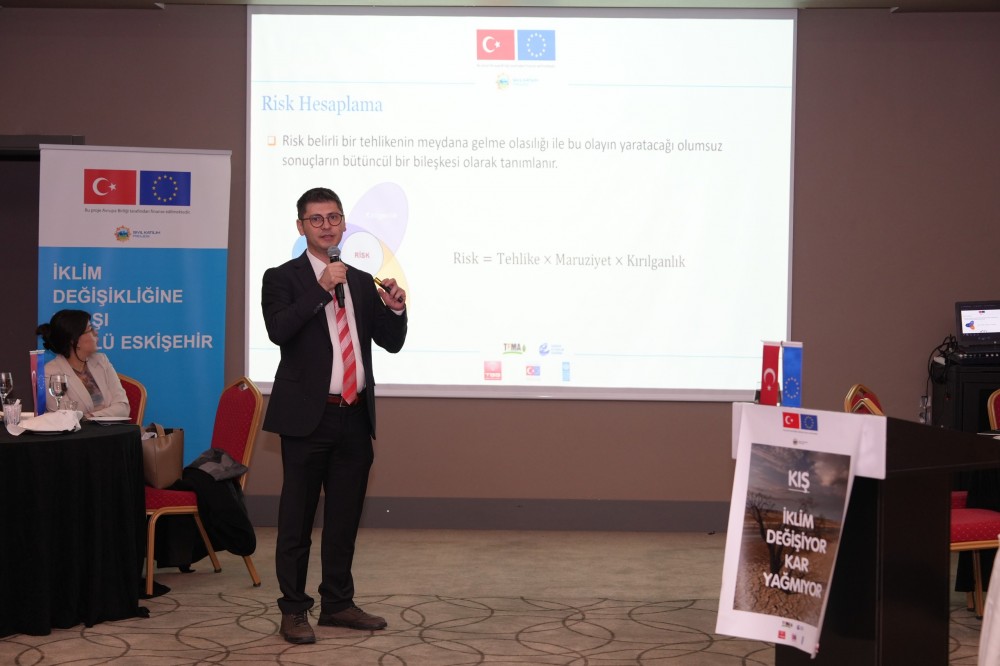
Following the speeches, Eylem Tuncaelli, Head of the Environment Policies and International Relations Department of the TEMA Foundation, and Dr. Vural Yıldırım, Data Scientist at Eskişehir Metropolitan Municipality, delivered technical presentations on the project.
Emphasizing that combating climate change has now become everyone's responsibility, Tuncaelli stated: "In order to develop lasting and effective solutions to climate change in cities, the active participation of the public in decision-making mechanisms is essential. With this understanding, we have been carrying out intensive work focused specifically on Eskişehir for nearly a year. In this process, we were fortunate, as Eskişehir has a strong and well-organized civil society. Through the meetings held within the scope of the project to date, we have achieved highly valuable outcomes in terms of civic participation. The surveys conducted as part of the project reveal that awareness of climate change across the city has increased by 12 percent. However, what truly matters to us is this: this project is not an end. Genuine awareness and transformation will be strengthened through the steps taken from this point onward."
Dr. Vural Yıldırım stated that, within the scope of the project, drought poses a very serious threat for Eskişehir in the period 2020-2030, adding: "The districts of İnönü and Seyitgazi are at high risk in terms of drought. In addition, with regard to forest fires, Seyitgazi, Han, and Mihalıççık are among our very high-risk areas. Extreme heat also emerges as a high to very high risk across all districts, particularly in Sivrihisar, Günyüzü, and Mihalıççık."
UNDERSTANDING AND MANAGING THE RISKS OF CLIMATE CHANGE TOGETHER
Within the scope of the project, monthly hazard and risk maps with a 1×1 km spatial resolution, extending through 2030, were prepared for climate-related hazards within the provincial boundaries of Eskişehir, including drought, forest fires, floods, and extreme temperatures. Based on these scientific datasets, an assessment and recommendations report was also completed by the end of the year.
Throughout the project period, various workshops were organized in cooperation with civil society organizations, the City Council, and Neighborhood Assemblies. In addition, panels and public meetings were held with the participation of experts in their respective fields. Moreover, the establishment of a Climate Action Center within the scope of the project marked another important step in the fight against climate change. Institutional capacity was further strengthened through technical training programs developed for the relevant departments of the Eskişehir Metropolitan Municipality.
To measure the impact of awareness-raising activities, two separate field surveys were conducted at the beginning and at the conclusion of the project. These surveys analyzed the knowledge level, perceptions, and changes in daily life habits of the people of Eskişehir regarding climate change. The findings revealed that the project contributed to an increase in climate change awareness across the city.